The Lord’s Prayer – A Personal Translation

Our Father

We address ourselves to You, the inconceivable origin of everything, the creative force of this eternally ongoing creation, the origin of the energy empowering all existence. Your spirit surrounds and exists within all life and all things in the universe. You are the original and primary parent of all of us everywhere. We turn our attention to You, seeking Your reassurance and parental guidance.

Who Art In Heaven

You are unimaginable because you exist within everything and everywhere, eternal, the entirety of reality, indistinguishable from creation. You exist in a realm of perfection. Your nature is perfect goodness, truth, and love. Heaven is not a place, but a condition of Your being.

Hallowed Be Thy Name

Our innate awareness of You calls for celebration. The purpose of our spiritual practice, our sacred writings, our prayers, religions and rituals, is to acclaim and honor Your presence. We desire to know You, to respect and obey You by living righteous lives. We are called to follow the principles we perceive in Your world and to help others to feel Your presence.

Thy Kingdom Come

We are blessed with awareness, conscious of our existence in You, grateful to be Your people. We are Your servants, commanded to make this world conform to the pattern we discern in Your perfection. Our innate awareness of You instills in us a feeling of brotherhood as Your creatures, citizens of Your world, Your people.

Thy Will Be Done…

Your spirit, life’s sacred energy is within us, our heartfelt call to follow Your instruction. All that we see, around us or in the far reaches of the universe, incomprehensible as light or simple as sand, all immediate creation and infinite existence demonstrates the generosity, goodness and truth of Your will: a compelling pattern for us to follow.

…On Earth As It Is In Heaven

Our fearful, selfish human nature constantly tempts us to act in ways contrary to Your will. We are reminded to live faithfully by this prayer, taught by Your son Jesus, praying that Your will may remain always in our hearts, prompting us to follow the guidance of righteousness of Your eternal spirit.

Give Us This Day Our Daily Bread

We pray also that following your guidance may bring us the physical blessings of sustenance, shelter, health and safety. We believe our needs will be met as we conscientiously follow Your will.

And Forgive Us Our Trespasses…

For the times we have ignored Your guidance and have done harm to others, to ourselves and to Your world, in whatever ways we have, we ask to be able to be and to feel forgiven. Only the mercy of forgiveness will allow us to live in peace with others, and forgiving ourselves will help us do the work we must do to change for the better.

…As We Forgive Those Who Trespass Against Us

The fruit of forgiveness is peace. We seek release from negative, judgmental thoughts and feelings so that we may live free from memory of wrongs we have done and which we have suffered. Grant us relief from guilt and sorrow, from vengefulness and hostility, that we may continue to live in freedom and to do Your will.

Lead Us Not Into Temptation

May this prayer restore our obedience, granting us a sense of Your presence that remains with us throughout our daily lives, guiding our thoughts and our behavior in moments of crisis or temptation. May we have the grace to repeat it throughout our days, reminding us continually of our love for You.

But Deliver Us From Evil

May our awareness of You compel our minds and hearts to follow Your guidance , to gain the peace, kindness and abundance of spiritually-centered lives so that we may make Your world a better place for our having lived.

For Thine Is The Kingdom, The Power, and The Glory.

Dear Lord, I speak this prayer of affirmation with all my brothers and sisters here on earth. I love you with all my heart.

Amen

Al’s App

I’m on my way to the city. There’s a big lot you can with a the Park Princeton app, but I pass it by. I like Al’s better. His old sign says “$6. Cash only.” No app. If you forgot your wallet you can pay him next time. I have been parking by Al for more than 30 years. He takes my 6 bucks, folds it into an impressive wad of bills and says, “Have a nice day.” Al’s about my age. “App? No fucking app,” Al would say. 

On the platform I opened the NJ Transit app to buy a ticket. My credit card had vanished. A message read: “INVALID TRANSACTION.” After typing the number three times I went into the station and bought the ticket, got on the 10:01, sat down and opened my iPad, tapped the W. Another tollbooth. 40 years using Word and Microsoft has to send a code to an Authenticator app of which there are two on my phone and no way to know which one. Neither, apparently. At 10:18 having gone back, changed my password and selected a way for not having to use a password, I began writing.  

My phone recognizes my face. That’s not enough? What happened to simple? I know. Hackers. But they’re are entrepreneurs too, and they’re smarter, apparently. 

Any VC guys out there? Or a student at MIT or RPI reading this? There is a gigantic audience of health- and time-conscious boomers who grew up with 5-cent gum and three-channel TV, still out here hating being made to feel old. Millions of eager customers for simply this: SIMPLICITY! The slogan: “Live App-Free!” Maybe not just us, either, even our grandkids will see that life is too short for signing in, for typing codes and changing passwords, for confirming you are who you were yesterday. 

The new new idea? Freedom from techno-innovations! There’s an enormous market waiting. Especially in the automobile design field. A clearly-marked button. Push it, it works. Turn the dial. It’s colder, or warmer, higher or lower, on or off. Probably save lives.

Finally, a fitting coda. I’ve finished writing and want to save this now, but there’s a Microsoft message telling me I have to “Sign In” in order to sign out. I’m going to talk to Al about this.

What Now

Words are the vehicles of thought. Some new ones, like “blog,” “influencer,” or “covid,” are lexical fast-food. Others have a more self-important sound, only vaguely defined. “Postmodern,” for example. This is meant to be a comparison of what is now (“post-,”) with what was modern some time ago. When? The Enlightenment? Darwin? Betty Crocker? How can there be a time after what is new?

Henri Bergson and Albert Einstein debated the nature of time in 1922. By all accounts Einstein, representing the new atomistic school, scored a TKO. Bergson, from the philosophic-metaphysical school, could not convince the audience that the passage of time (what he called durée,) was better understood in an emotional, spiritual context. Einstein stood for the currently accepted view and, like the electric toaster, his ideas sold.

A hundred years later Bergson’s version of time is more appealing. Time is development, an unfolding continuation of reality, every moment presenting differences in the essence and attributes of the universe. Now is not post-modern, it’s post-everything. The way we relate to the world is not the way our parents or our ancestors did; not the way our kids do. The conditions, the conscious reality of passing time is different to every person, every moment, every day, presenting new ideas, requiring new responses, new directions. Change may bring improvement; it may beckon a desire to return to the past. It may also make lessons of the past seem obsolete. Lessons like the finality of the atom or the wisdom of electric vehicles will become the new “Let there be light,” Noah’s ark, Jonah’s whale.

Humanity needs God. Otherwise we choose things, diversions, false gods. You can see it in our adulation of powerful leaders. To reassure humanity, to guarantee our future something has to happen to make religion a thing. Some way to make faith rational. Our materialistic, scientific ways of thinking have made sacred writings, the messages of myths and creeds seem quaint antiques or, worse, “articles of faith” which can hide ignorance or, worse, perpetuate hatred. It now seems to be a test of one’s intelligence whether to believe ancient human stories of creation, miracles or claims about the meaning of life from our sacred books. We live in a world without certainty. We need to explore what comes after post-modern.

How are we to conceptualize God in this new world? Not by going back to the old superstitions but to give the sacred old words a new context: to understand not with our intellects but with our emotional centers. To redefine intelligence. We have to think with our hearts. The time is now.

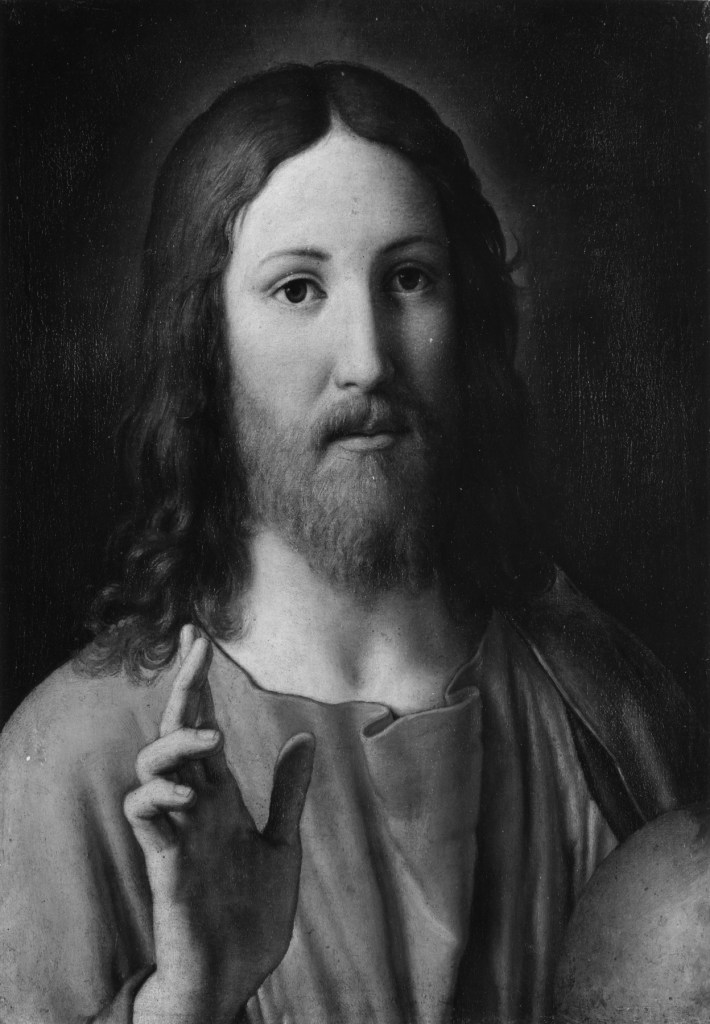
Jesus was a reformer who taught love, generosity, tolerance and forgiveness as the true message of the Tanakh, Hebrew scripture, what he referred to as “the law and the prophets.” There were few specifics to his theology. He described God not by recounting deeds, not in personal or physical terms, but by the qualities that constitute divinity. He taught us how to pray and how to behave. “Be ye perfect, even as your Father in heaven is perfect,” he said. Simple, but not easy. “I give to you a new commandment,” he said. “That you should love one another.” Nothing complicated, no formulaic religious duties nor even any specific creed. He believed his teaching would speak for itself. “By this all people will know that you are my disciples.”

He personified humility, never wrote anything down, never sought to be idolized, even telling his followers to keep quiet about who they thought he was. Jesus never asked to be considered anything but a “son of man.” He recognized, quoting Psalms, that we are “All gods, sons of the most high.” He never recommended any worship ceremony except, as we read in Paul’s epistle, “Eat this bread and drink this cup… In memory of me.” He did not have to start a new sect; his charisma was enough. Christianity is now, two thousand years later, a religion with over two-and-a-half billion adherents, one-third of the world’s population. Jesus is the most important person who ever lived.

The Gospels tell the story. The crucifix, the image of him crucified is a signpost, to “Bring all men to me.” His prescription for living is one of selflessness, leading to real value as living beings, to personal salvation from otherwise unfulfilled lives. Later followers established a church in his name, with sacraments, holy days, rules and regulations. These provide sanctified inspiration and perpetuate the messages of his teaching and his exemplary life. Like all human institutions, they have also been capable of cruelty and destruction.

Ultimately Jesus’s life and his teaching become real only in our hearts, in the spiritual centers of our being. Following his example, meditating on the Truth he taught, the miracles he performed, the generosity he personified, his willingness to sacrifice himself – this is Christianity. It is not necessary to understand God to live a God-centered life. Really there is no way to understand God, but we can see and feel God by being followers of Jesus, praying and acting as he taught us. The Gospels give us not concepts or ideas but life-long motivation, influencing our mentality, guiding our behavior.

Of Value and Tariffs

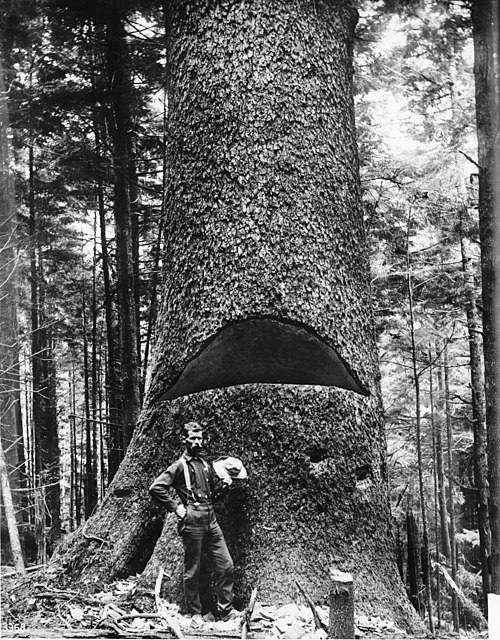
A tree falls in a forest, and whether it makes any noise or not, it’s just a dead tree. The lumberman who cuts it into lumber makes the tree something it was not. The man turns the dead tree into a product. A shepherd who shears his sheep and gathers the fleece. A woman knits yarn to make a sweater. All of them transform something originally worthless into something of value.

The United States economy, our “gross domestic product,” is composed mainly of “service sector” activities. Eight out of ten of us are employed in this sector. Until recently the greater source of wealth in our country was manufacturing. We were lumbermen, shepherds and knitters. “Free trade” policies in the late twentieth century allowed Americans to purchase less expensive imported televisions, cars, clothing and furniture. Countries with cheaper labor learned to produce things, transforming raw materials into consumer goods, creating value. Americans were delighted with this, oblivious to the reality that the creation of value was disappearing. We became a nation of service sector consumers. To complete this Frankenstein scenario, in a frantic effort to kill the monster it created, our government is now brandishing trade tariffs.

Is this too little too late, or something worse? Are we not, instead of killing the monster, punishing ourselves by increasing the prices of everything? Do we think we can rebuild the factories and train the workforce to compete with emerging capitalism? Won’t discouraging immigration prevent our own competitiveness? Is our infrastructure, ambition and our knowhow sufficient to replace or even compete with the rest of the world? Making foreign furniture more expensive will not increase the value of our trees.

Doubtless in time we will understand that our destiny and even our existence depend on worldwide cooperation. There will always be producers and customers, always be manufacturers and servers, but in time we will not be separated by militarily enforced borders, arbitrary government policies and other symptoms of envy and hatred. In the enlightened future we will see that the creation of real value depends on transformation of a tree into a desk, and of citizens of a country into citizens of the earth.

Dharma and The College Senior

A while ago a student about to graduate sat in our store waiting while his friend was being fitted in a suit for upcoming job interviews. To break the silence I asked him what he was planning to do after college. He replied, “No idea,” without looking up, as if he’d been asking himself the same question. His laconic answer suggested not confusion as much as sadness. “I had an interview with Goldman,” he added, “but I don’t wanna be in finance really.”

I asked what he’d majored in. “Philosophy,” he said.

I am sure this young man was familiar with the Sanskrit word dharma. This concept from ancient Vedic tradition can be found in western philosophies, in the writing of Arthur Schopenhauer, for example, and Friedrich Nietzsche. A precise definition of this term seems to elude western thinkers however, as it seems to have two different meanings. Dharma is the spirit within all of creation, a blessed, universal “will.” It also alludes to one’s personal destiny, the path one follows in life. These may seem to be two different things.

The word actually conveys these two definitions in one unified concept. That is, there is a sacred “way” in the nature of the universe, and each of us has the responsibility to follow it, to live our lives accordingly. Dharma is universal and personal. There is force for good within existence which each of our lives is meant to personify. This is confusing to the modern, western mind because we have been taught to think of fulfillment as a material matter. We are generally not aware that the gift of life comes with a personal, moral responsibility and that fulfillment is the ultimate reward for carrying it out.

I felt for the young man sitting in my shop that evening. He was dispirited, not just by confusion about his career, but by an unconscious, heartfelt awareness that he did not know who he was, how or even why he would live out his dharma.

I might have helped him by sharing my story. Years after graduating from college I was led by the brutal futility of living by self-will to practice a spiritual, contemplative lifestyle. After having developed a daily routine of prayer and meditation I found myself on the right path. I got a message, delivered to my heart, to my spiritual subconscious: “This is the way, the truth, and the life.” My life’s goal was not what I thought; fulfillment came from within.

The awareness of our path is communicated by spirit to our heart, not to our intellect. Sensing and living out one’s dharma offers a sense of purpose, confidence and peace not included in your typical employee benefit package.

After Life?

Anna Shoiko’s husband is very sick and she’s gone back to Ukraine to care for him. She would come to our house early every other Friday for the past twelve years, leaving it tidy and immaculate. Anna was like family. She introduced us to her niece, who is to replace her, saying she was never coming back. “Never,” she said, several times. After we said goodbye and she drove off last Friday I felt something like grief.

I don’t like never. Can’t really grasp it. Forever either. Never and forever suggest that time disappears, before birth and after death. They are door-words behind which lies eternity, inconceivable yet an inevitable, an unsolvable mystery against which we lock our mental doors and turn on emotional alarms. We humans have invented worlds beyond these doors: reincarnation, the afterlife.

God, Atman or Universal Spirit, the omnipresent, undefinable, eternal reality, is the source and the energy of everything that exists. Like never and forever It is inconceivable. So we have given It names, placeholders, YHWH of the Hebrews, Moslem Allah, the Zulus’ Umkhuluwomkhulu. We have created mythical personalities, heavenly dramatis personae with human attributes, even defects like inexplicable favoritism and murderous vengefulness. These deities serve many purposes, solving mysteries of earth and sky, fortune and misfortune and, more important, assuring social order, legitimizing governing power. Tribal leaders like Moses to Henry VIII and since have combined religion with government, claiming a “divine right of kings,” conflating faith with obedience, enforcing it all by burning non-believers, critics and heretics alive.

The execution of tribal law was dependent on heaven and hell. Religion or spirituality was a risk/reward proposition, establishing behavioral guardrails, guaranteeing loyalty. The rules said that if I didn’t go to Mass on Sunday and if I should die on Monday that I would spend eternity in agony, being tortured and burned. Wow. Fear was supposed to be a motivator, but it didn’t really work. I skipped church anyway. The “loss of heaven and the pain of hell” did not work to conquer my desire for worldly pleasures. I was hell-bent, until I gave it some thought.

Now I am closer to death, and my afterlife consists of what I have done and yet can do, the change I have made in this world, for better or for worse. My fear of disappearing, my dread of Never is a motivating positive emotion, not of eternal bliss or torment, but of having taken more than I gave. The inevitably of my disappearance is a daily reminder that every day, every action, every relationship I have, every minute of my life is an opportunity for me to have a positive effect on Forever. That’s enough. My afterlife is whatever small goodness I can effect, benefits to be felt by those still living in a better world from now on.

Nice Truck!

Almost every social or governmental issue these days is a boxing match, fighters charging out from opposite corners punching, swinging for a knockout. Look at economic policy for example. John Maynard Keynes’s ideas, advocating intervention when demand falters, using tax and investment to correct economic conditions, are favored by one side. These are considered “liberal.” Milton Friedman’s Chicago School proposes tactics associated with “conservative” attitudes: controlling interest rates to regulate the money supply, sanctioning free trade, allowing markets at every level to self-regulate. Friedman learned to box in Ayn Rand’s Atlas Shrugged gym; Keynes took lessons from Upton Sinclair’s The Jungle, a very different Chicago school.

Both of these approaches are functional and both are faulty. Over-regulation of the money supply may have unintended consequences and foreign governments may manipulate domestic policies to keep their exports competitive. Federal interventions, like welfare, don’t always work at the outer reaches of a good idea; good intentions don’t guarantee efficient results. Analysis of the complexities and the choice of the proper remedy should be left to wise, unbiased practitioners, not stage actors competing for votes.

Value is a consequence of desire. Desire is regulated by human emotions. An optimistic outlook promotes positive activity, purchasing, investment, confidence in the future. Economic downturn is the result of negative emotion, pessimism, fear. The “Great Depression” and economic downturns generally have been caused by a contagious fear that things are going to get worse and thus, inevitably, they do. The value of a new home or a new t-shirt increases and diminishes with my desire to own it, which varies with my confidence or insecurity. Would I rather live in a new house or have that money in the bank? These days the omnipresent media constantly presents the boxing match of policy making with no neutral voice, each side predicting doom if they lose. It is like having two plumbers under your kitchen sink cursing, arguing about which wrench to use. Which one can fix it?

Neither Friedman nor Keynes was 100% right. Not all remedies are guaranteed and orthodoxy does not guarantee success. The the principal responsibility of a leader is to inspire confidence, to combat negative emotions in words and actions. This is the problem with modern democracy: electing leaders based on their popularity instead of their background, education, demonstrated wisdom and proven ability is like hiring a plumber because you like his truck.

Creation

Curiosity is the wellspring of creativity. The human desire to explore, to seek answers and to uncover secrets is the source of every invention and every technology, all of art, and all of religion. We have always been curious, for example, about the origin of the universe. What started this? How did we get here? Every tribe has invented and passed down a creation story. No matter how exhaustively studied, no matter what science may propose, no matter the evidence, the source of universal creation will never be more than a theory, never anything more than a myth dressed up in equations and so-called proofs.

Creation is not something that happened; it is perpetual, ongoing. The next moment in time does not exist yet. Universal conception is taking place now, constantly. The world and everything in it is continuing to take shape, to be formed, to become reality with every moment that arrives. The quaint idea that some supreme being initiated eternity and infinity does not pass the simplest test of logic. The supreme being is the mystery itself, always prompting our curiosity.

Lately the “Let there be light” story was replaced by a “Big Bang” hypothesis. Doubtless in ages hence, as the finality of the atom was replaced by string theory, the Big Bang will have become a cute antiquity. Maybe people will go back to believing in a mysterious deific force waving it all into being. It is certain that we’ll never know for certain. Human curiosity will doubtless persist, but it is hopeful that we will focus our curiosity not on the “How” but turn instead to a more important, personal question. “Why?”

Why are we here? Why am I here? What is our purpose, our significance? What can I make of this life I’ve been given? How will I honor my own creation? A desire for value in one’s own life prompts fundamental, existential questions: What is my purpose? How can I be of value? How shall I be satisfied with my life? These questions may never be answered but must be asked. The meaning of our creation is our responsibility to find, and the result of our curiosity will simply be a more rewarding search.

Equality?

Being denied anything by custom or tradition or by law because one is a female is intolerable. Not having an equal say in society; not being paid the same for the same work; not being offered or allowed to pursue the same opportunities; not having the same rights that males have to control their life’s choices. All of these are immoral, insufferable restrictions. The feminist movement is perfectly justified, in fact required, to recognize and to work to eliminate them.

Men and women are not really equal, though, are they? Men do not give birth. Men cannot suckle a newborn. A woman has a monthly interruption, a physical reminder of the processes of maternity. Men do not have physical attributes of childbearing nor the conscious possibility of maternity. Ultimately we must see femininity as the source of life. The male has a different role, by genetics, physical nature and tradition. Men and women are not the same.

Gender discrimination may be seen as an unfortunate result of the male instinct to value and protect the female, the mother, the spouse, the daughter, from other men. Discrimination may be the degeneration of a natural impulse to safeguard, to honor mothers and children. Male-dominated societies gradually confused need for protection with inferiority. Women, once protected became enslaved; blessedness became inferiority. Adoration of the feminine was lost. Male domination was simply a perversion of the original protective instinct. Men are naturally fearful, and fear will create monsters where there are none.

There is hope that in these times, the later stages of the so-called Enlightenment, that men will fully understand the equal rights of all beings and will shed any compulsion for domination. That the human race will once again cherish feminine specialness and to celebrate its complementary principles. Women may no longer require protection, but every human being deserves respect.